
[Interview Reflection] KCTV Anchor Jamie Lee on Journalism, Language and Communication
What makes someone a meaningful communicator? In this interview reflection, KCTV Jeju anchor Jamie Lee shares lessons on journalism, language, personal branding, and authentic storytelling.

Who is a journalist? I still don't have a certain answer for that. Unlike several professions, journalism doesn't have a single path. Some have a degree or newsroom experience; others work independently as citizen journalists, newsfluencers or creators reporting on current events.
With the continuous industry-wide changes, I've stopped worrying about the labels and instead decided to focus on what makes someone a good journalist. To find the answer, I began with Jamie Lee, whose experience across anchoring, interpretation, voice-over work, and emceeing has made her an effective communicator.
Having lived in Jeju for more than a decade, she has become a bridge between the island and the world as an English-language news anchor at KCTV Jeju, former host of Arirang Radio's The Wonders of Jeju, interpreter, and founder of Chicjeju.
Do check out my interview with Jamie Lee for Honorary Reporter to discover the Jeju beyond headlines and travelogues, or read the published copy through this link.
Jamie’s diverse background commonly connects through ‘communication,’ that she describes as something more than “delivering a message.”
“My background in internal and global communications at firms like Pfizer and Deloitte taught me that real communication is mostly about what isn't said: reading a room, catching the gap between what someone states and what they mean, and deciding how — or whether — to fill that gap without overstepping my role.
I began to contemplate on questions such as: Do I smile while reading a particular line on air or hold a neutral expression? Do I add a clarifying note when I sense a speaker has dodged a question, so the audience doesn't lose the thread? These instincts move fluidly between roles — they're the same muscle, just exercised in different rooms,” she explained.
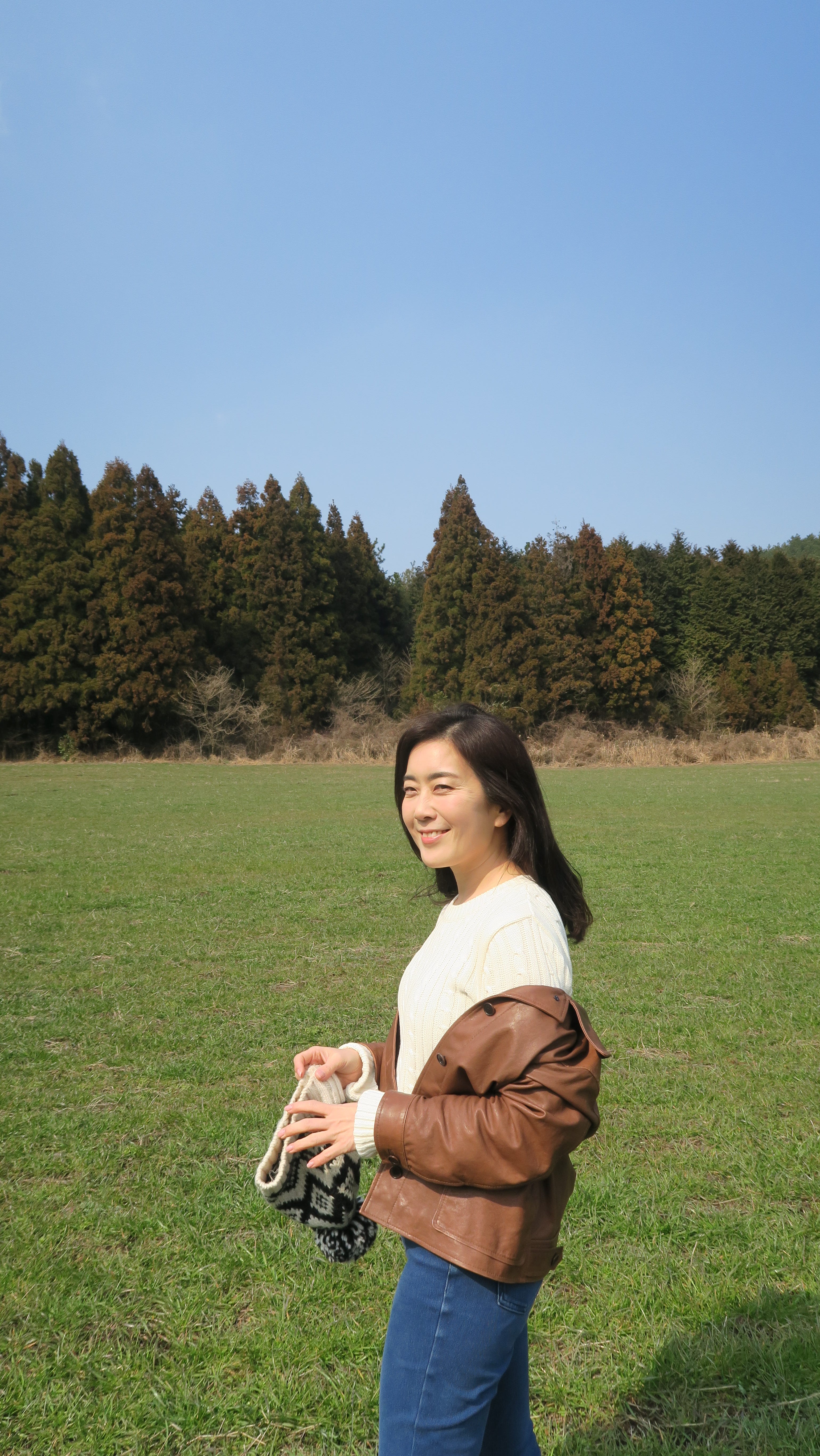
Among all the various endeavours, she finds her personal brand, ChicJeju, the hardest to reconcile. She describes it as her window into the future, far from her current polished newscaster image.
“For a long time, the only bridge between the two was simple: I have a voice, and that voice carries a certain authority, which lets me speak about Jeju in a way that feels different from how other Koreans typically frame it.
At first I assumed people were drawn to the polished, broadcast side of me. But as I built out different content pillars — Jeju news, broadcast behind-the-scenes, and the more personal pillars — I started noticing something else: people were responding to the parts of me that had never been in the spotlight.
That diversity of interest reflects something real, I think. People seemed to enjoy seeing how I viewed Jeju through my Chicjeju brand and learn why I call Jeju chic,”
She further describes personal branding as showing your thoughts, values, and the throughline beneath the roles. Sharing her determination to keep using her voice even after retiring from broadcast journalism, believing that a sustainable personal brand is built slowly over time.
It was this very authenticity that attracted me to Jamie’s work. I came across her thoughts on language learning from an interpreter's perspective, and felt moved. Languages are hardly ever limited to their grammar, definitions, or sounds. They carry emotions, experiences, and intentions unique to each individual. They actively shape our memories, perspectives, and feelings.
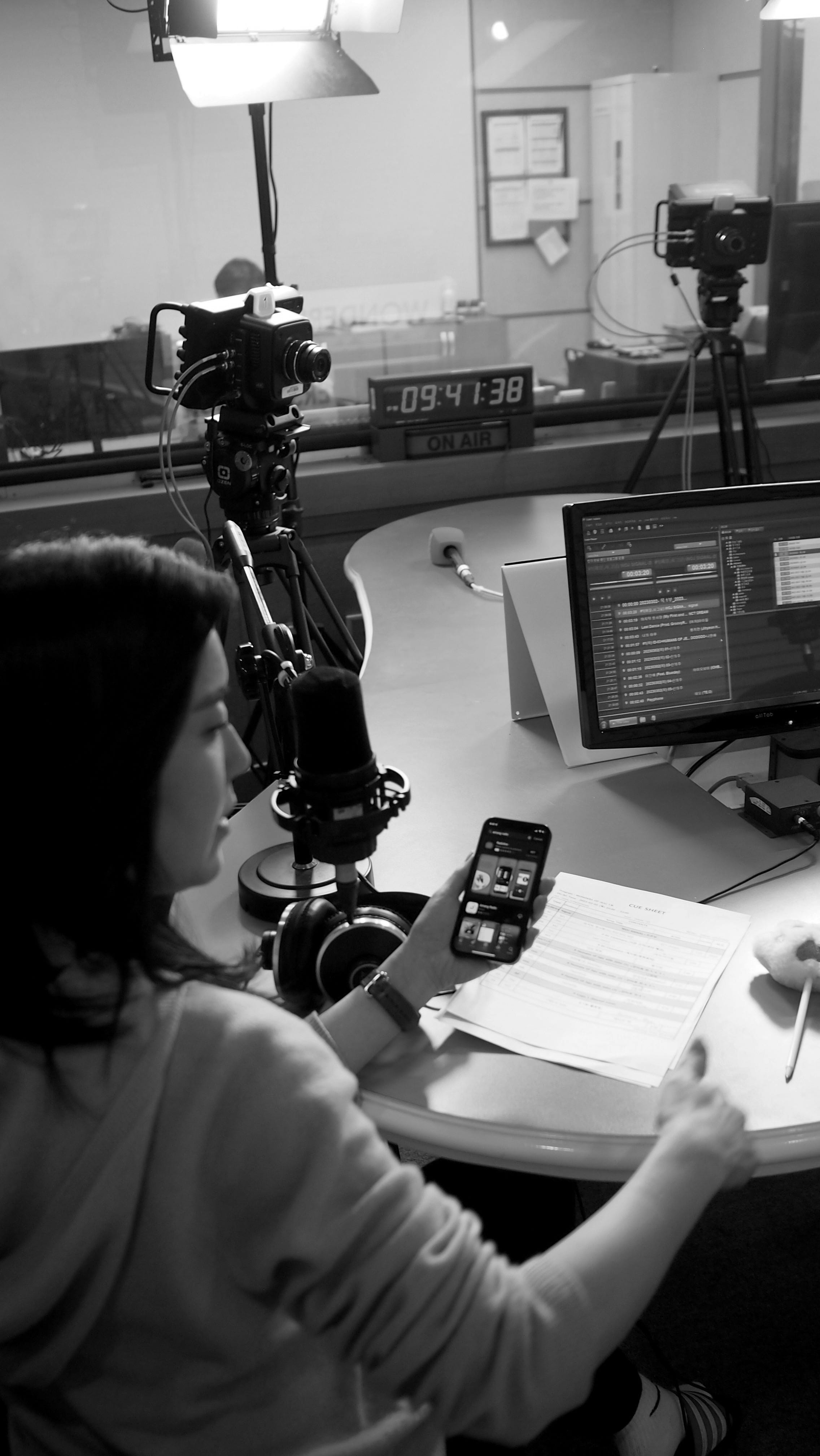
I learned that Jamie has had a complex relationship with languages—namely English and Korean. Having moved frequently in her childhood, she had to entirely relearn her mother tongue at the age of eleven by sounding out Korean textbooks letter by letter as an attempt to sound as authentically Korean as possible.
“That process of rebuilding a language from scratch, by ear and by instinct rather than by rule, shaped how I relate to both languages today. I move between English and Korean fluently, but I've never been able to transfer 100% of the culture embedded in either. For years, that in-between space made me feel like no one fully understood me.”
Unlike her personal experience, language becomes a door into new industries, cross-border business, politics, and governance during professional interpretation.
“The stakes can be enormous, and it's humbling to know I've helped close a gap that might otherwise have taken far longer to bridge, or might never have closed at all. Few people understand what's actually happening in the brain during interpretation. After completing my graduate degree in interpretation and translation, I became genuinely fascinated by the cognitive load of moving between languages — the sheer mental energy it demands.”
Within the field of interpretation and translation itself, the approach changes depending on the purpose. In simultaneous translation the aim is to convey the meaning while balancing the core emotions as well. In in-ear interpretation, the aim shifts to convey the correct emotions rather than the exact words, while in special cases such as in investigation it becomes increasingly important to convey the exact words and meanings.

For journalists, the medium of reaching audiences plays a key role. Broadcast is often considered more personal than digital or print media, while short-form videos shared through social media are considered nearly a direct communication. What I found surprising was Jamie described finding a parallel experience between radio and social media.
“Listeners could respond instantly — I'd read their comments and questions live and respond in kind. Social media carries that same energy. Many of my Instagram and YouTube followers actually came from my time hosting Wonders of Jeju on Arirang Radio. On some days, when I shared something personal, I felt a genuine connection with listeners. On other days, it felt like reading a script to an empty wall. Over time, the connection became the point — those were the days radio stopped feeling like a job.
When I deliver the news today, I think about whose life the information might touch, or what might genuinely help someone — and if it's interesting enough, I can't wait to bring it to Instagram. It's even shaped how I teach. In my university classroom, helping students learn to connect with an audience through real stories has become some of the most engaging work I do.”
Before ending the interview, I wanted to ask the one question I had been thinking about throughout our conversation. What, in Jamie Lee's opinion, makes someone a meaningful communicator today?
The answer was: the silences. In a hyper-connected world, looking at what's underneath the polished, confident speech becomes a key seperating a good and a truly meaningful communicator.
“If you can train yourself to perceive what's withheld rather than only what's offered, you develop a kind of discernment that becomes genuinely valuable — not just professionally, but humanly. It's a quiet skill, often invisible in the moment, but it's what allows you to build real trust with an audience rather than just transmit information to them.
I believe that instinct — more than any platform, technique, or technology — is what will determine who actually communicates meaningfully in the years ahead, and it's a skill worth deliberately cultivating, not something you either have or don't.”
As I conclude this reflection, I'm grateful for everything I learned—not only about Jeju, but also about communication and what it truly means to connect with the people behind our screens.
This feature expands upon my interview with anchor Jamie Lee originally published as part of KOCIS's Honorary Reporter 2026 program. Read the original article here.
It’s so fascinating to read about a professional’s purpose behind their work. Great article as always!